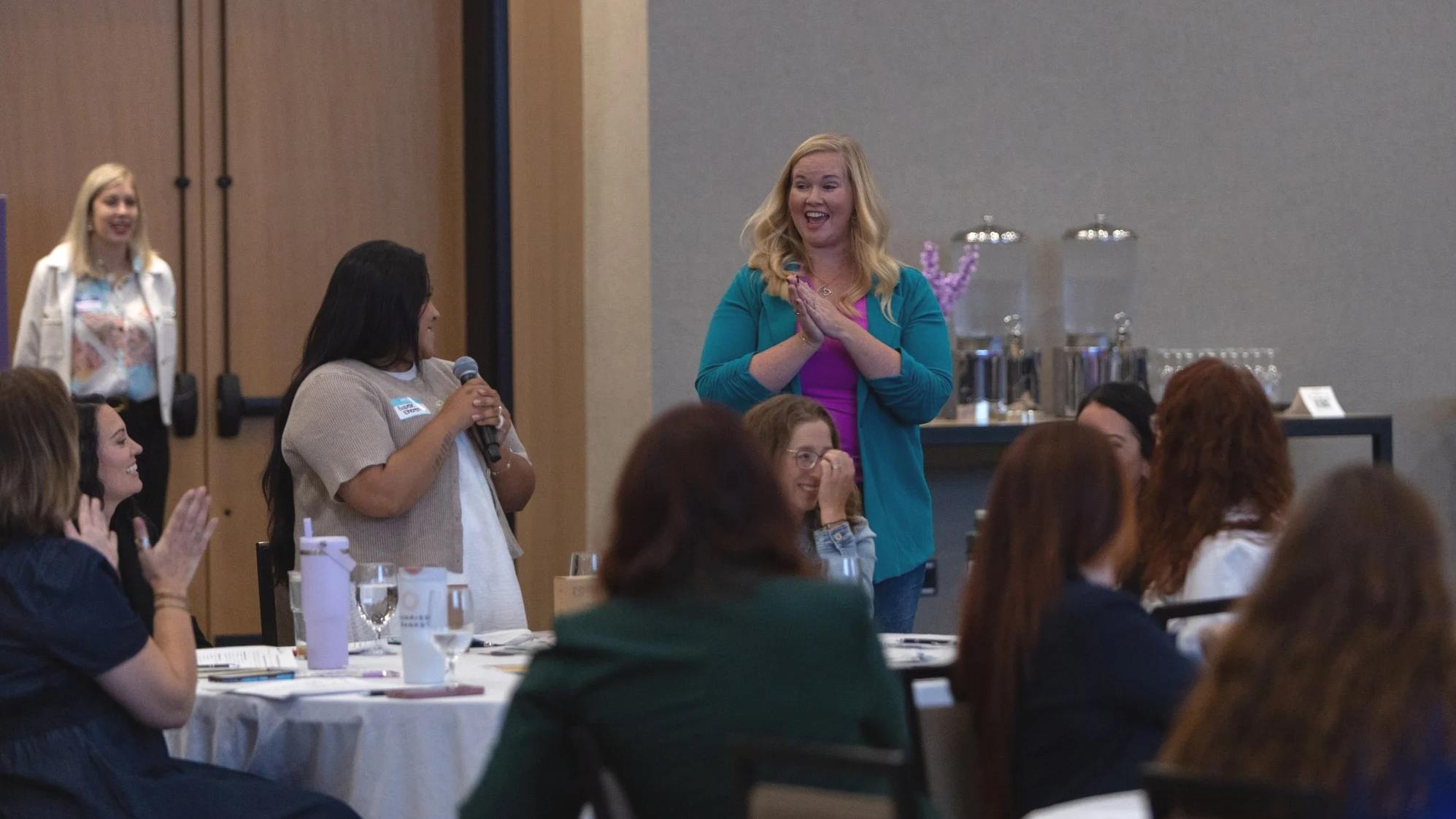
SD CEO Women's Visionary Summit, 2026. A little discomfort, a lot of encouragement, and the occasional push outside your comfort zone. That's part of the experience, too.
I've spent a lot of time thinking about what we're actually selling when we sell a service.
If you sell a physical product, there's usually something tangible for a customer to evaluate. They can look at it, compare features, read reviews, and sometimes even try it before making a decision.
But what happens when the thing you're selling is your expertise?
For consultants, coaches, speakers, trainers, advisors, and countless other service professionals, the product isn't always something you can put on a shelf or demonstrate in a few minutes. You're asking someone to invest in your experience, your judgment, your perspective, and your ability to help them accomplish something they may not be able to do on their own.
Whether we like it or not, that means we're part of the product.
I've been thinking about this more as I continue growing Classic Customer Service. When someone considers working with me, they're not just evaluating a list of services or a framework I've developed. They're trying to determine whether I understand their business, whether I can help them identify opportunities they may have overlooked, and whether they trust me enough to invite me into conversations about their challenges and goals.
That's a pretty significant ask.
Especially when you consider that, unlike buying a physical product, they can't always see exactly what the outcome will look like before making the investment.
Of course, credentials, testimonials, previous experience, and case studies help. They give potential clients something to evaluate and can provide reassurance that you know what you're doing. But I don't think those things tell the entire story.
People are also paying attention to how you show up.
Do you listen when someone is explaining a challenge, or are you already thinking about how to sell them your solution? Do you ask thoughtful questions? Can you explain your approach in a way that makes sense to someone who doesn't live and breathe your industry? Are you willing to acknowledge when something isn't your area of expertise?
Perhaps most importantly, do your actions align with what you say you believe?
I've met plenty of incredibly knowledgeable people who struggle to communicate their value. I've also met people who are fantastic at presenting themselves but leave me wondering whether they can actually deliver what they're promising.
Neither extreme is particularly helpful.
I think the strongest service professionals recognize that expertise and the experience of working with them go hand in hand.
Think about hiring a personal trainer. You might look at their certifications, experience, and approach to fitness, but you're also evaluating whether they'll understand your goals, challenge you appropriately, and help you stay accountable. You don't necessarily need someone who shares your personality or interests, but you probably want to feel confident that they can help you make progress.
The same is true when hiring a financial advisor, leadership coach, consultant, or professional service provider. The knowledge matters, but so does the person's ability to apply it to your circumstances.
That's where relationships enter the picture.
In my last blog, I challenged the idea that we have to like someone to hire them. I still believe that. We don't need to become friends with everyone we work with, and personal chemistry shouldn't automatically outweigh professional competence. However, there's an important distinction between liking someone and trusting them with your business.
When you're inviting someone into your organization, you're often giving them access to more than a project or a set of deliverables. You're sharing challenges, uncertainties, goals, and sometimes information you wouldn't discuss with just anyone.
You need to know that person will treat those conversations with care, exercise good judgment, and tell you what you need to hear rather than simply what you want to hear.
That's not necessarily about likability.
It's about credibility.
There's another piece of this that I think we occasionally overlook, particularly when we're trying to grow our businesses: people are forming opinions about us long before they become prospective clients.
They see how we interact at networking events, how we respond to questions, whether we follow through on introductions, and how we talk about the people and organizations we've worked with.
They may read something we've written, hear us speak, or have a conversation with someone who knows us. None of those interactions may have been intended as a sales opportunity, but they can influence whether someone eventually feels comfortable reaching out.
That's one of the reasons I've become so intentional about sharing my thoughts and experiences through these blogs. I don't expect someone to read an article and immediately decide they need to hire me. But I do hope that, over time, people develop a better understanding of how I approach relationships, business development, and the challenges that come with growing a business.
When the right opportunity presents itself, perhaps that familiarity makes starting a conversation a little easier. Of course, there's a balance here, too.
Being part of the product doesn't mean we need to be available around the clock, turn every interaction into a networking opportunity, or carefully curate every moment of our lives to maintain a professional image.
We're human. We have personalities, boundaries, strengths, and areas where we're still learning.
I think acknowledging that can be part of building credibility as well.
What matters is being intentional about the experience we're creating and recognizing that, in a service-based business, our reputation isn't built exclusively through the work we deliver.
It's built through the conversations leading up to it, the decisions we make along the way, and the relationships that continue long after the engagement ends.
When someone hires a consultant, coach, trainer, or advisor, they're not just purchasing a service.
They're investing in the person responsible for delivering it.
The more personal the expertise, the more important it becomes to demonstrate that the person behind the service is someone worth trusting.
Built on Relationships. Driven by Growth.