The Business Case for Small Talk
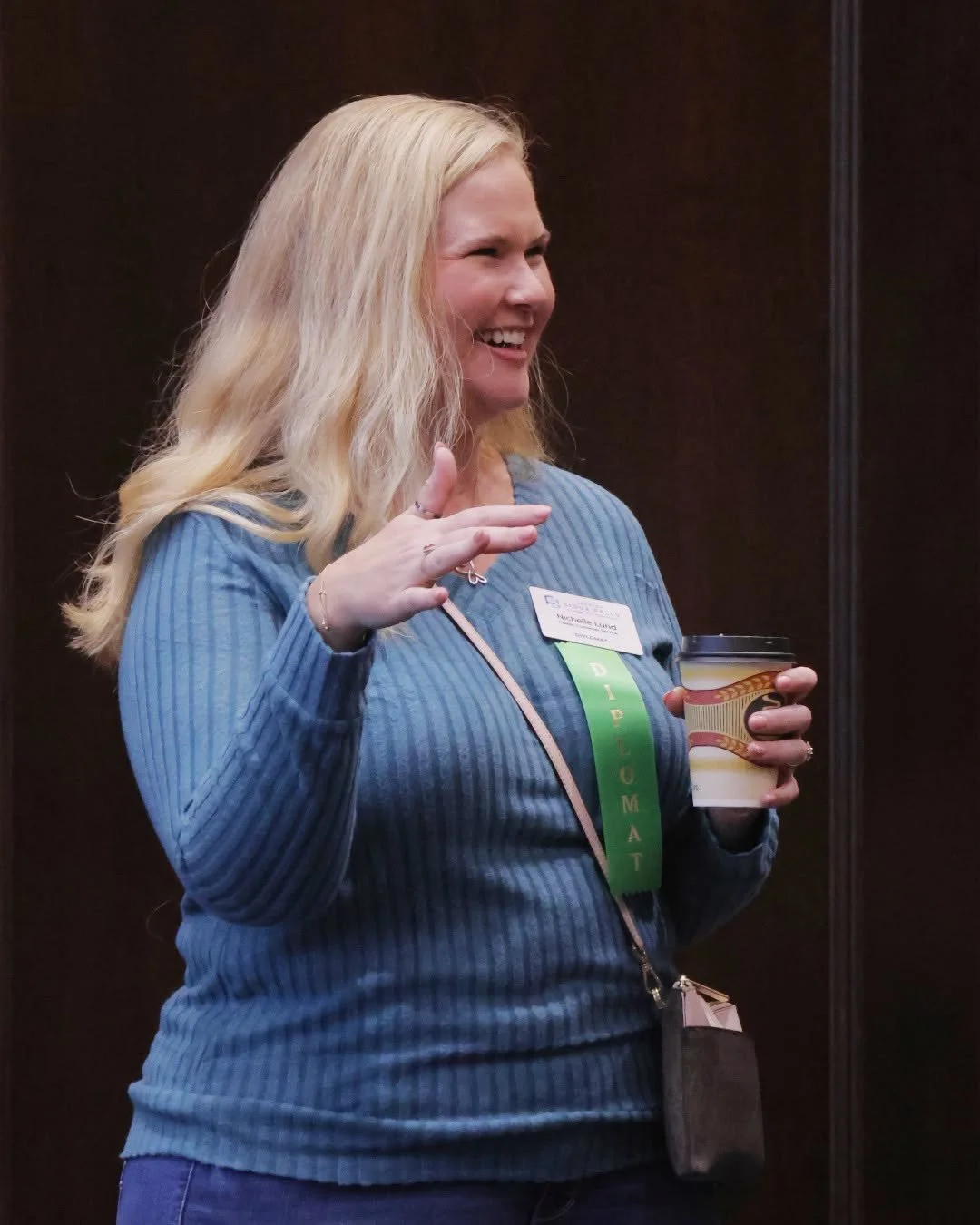
I don’t remember the exact moment this photo was taken - but in this conversation we discovered that he spent a summer in a town about 30 minutes from where my husband grew up. There were MANY other commonalities and differences we learned in this conversation. We’ve known each other for 3+ years and just now had this lovely experience.
I've had a surprising number of conversations lately about small talk.
Some people love it. Some tolerate it. And some would very happily skip the weather, weekend plans, kids, dogs, and "How have you been?" and get directly to the reason we're sitting across from each other.
I get it.
Especially in business, we're constantly being told to respect people's time. Have an agenda. Get to the point. Know your ask. Don't schedule a 60-minute meeting when 30 will do. I agree with all of that, but I also think we've started confusing efficiency with effectiveness.
Some of the most valuable information I've learned in a business conversation had absolutely nothing to do with the reason we originally scheduled the meeting. It came from the five minutes before we got down to business.
Someone mentions they're getting ready for their daughter's wedding, training for their first half marathon, moving offices, or just getting back from vacation. Maybe they're volunteering for an organization I've worked with, their kid is looking at colleges, they're excited about a new hire, or they're exhausted because their team is stretched thin.
That's "small talk."
Except...is it really?
Those little pieces of information are how we begin understanding the person sitting across from us. And there's actually research behind this. Studies of B2B sales conversations have looked at the role small talk plays in professional relationships, ranging from impersonal topics like weather and traffic to more personal conversations about interests, opinions, preferences, family, and shared experiences.
One distinction in the research really stood out to me: superficial small talk without any emotional connection can absolutely feel like a time-wasting formality. I think we've all experienced the networking conversation where we're discussing the weather simply because neither person knows what else to say. But conversation around genuine mutual interests or personal experiences can do something very different.
Maybe the business case isn't really for small talk.
Maybe it's for meaningful small talk.
Business is still done between people, even in B2B. A company doesn't walk into a coffee shop and sit across from me. A person does.
People remember when you remember them.
It doesn't have to be complicated. Ask how the wedding went. Remember that they were headed to England and ask about the trip. Send the name of the restaurant you talked about. When you see something related to an organization they care about, send it their way. Follow up three months later and remember something that wasn't written in the meeting agenda.
None of those things are particularly revolutionary, but they're also not transactional.
I think that's where small talk earns its place in business development. It gives us context and helps us find common ground. It gives us little clues about what someone values, what they're navigating, and sometimes even what they need before they've explicitly told us.
It also creates opportunities for connection we'd completely miss if every conversation started with, "Okay, let's get down to business." (que Disney’s Mulan earworm)
I've experienced this over and over again in my own work. I'll sit down with someone intending to learn about their company, and somewhere between talking about travel, community involvement, career changes, family, or whatever else comes up, we'll discover three people we both know, an organization we both care about, or an opportunity neither of us knew existed when we sat down.
Sometimes that turns into business. Sometimes it turns into a referral or an introduction to someone they really need to meet. Sometimes we just have a really good conversation.
That last one still has value.
But I want to be careful here, because there's a version of this that I absolutely do not advocate for.
Don't ask someone about their kids because you read that "personal questions build rapport." Don't memorize someone's hobbies so you can deploy them later as a sales technique. And please don't stalk someone's LinkedIn profile for three minutes before a meeting so you can casually manufacture a "Wow, I love that too!" moment.
People can feel manufactured interest. That's not relationship-building. That's a tactic with a smile.
Genuine curiosity is different. It's listening because you're actually interested in the answer, asking the follow-up question, remembering what someone told you, and allowing a conversation to wander occasionally because the relationship you're building may ultimately be more valuable than getting through every bullet point on your agenda.
Sometimes there isn't time for any of this. Sometimes we really do need to get down to business.
In fact, last week I made the argument that sometimes I don't want to know you at all. I just want the Buy Now button.
Now I'm writing an entire blog about why we should talk to each other.
Both can be true. 😂
Customer-centered business requires us to recognize the difference. If I already know exactly what I want and I'm ready to buy it, make that process ridiculously easy. But when we're talking about B2B relationships, strategic partnerships, referrals, community connections, or any kind of business where trust matters over time, I'll continue making the case for a little meaningful small talk.
Because asking about someone's vacation probably isn't going to close the deal. But remembering it might tell them something about what it would be like to work with you. Over time, all of those seemingly insignificant conversations can add up to something that isn't very small at all:
A relationship.
Built by Relationships. Driven by Growth.